In my last posting, I discussed how advocates for more transparency concerning the U.S. government’s knowledge of the UFO / UAP subject were experiencing a significant amount of pushback from the Pentagon as they sought more information on this topic.
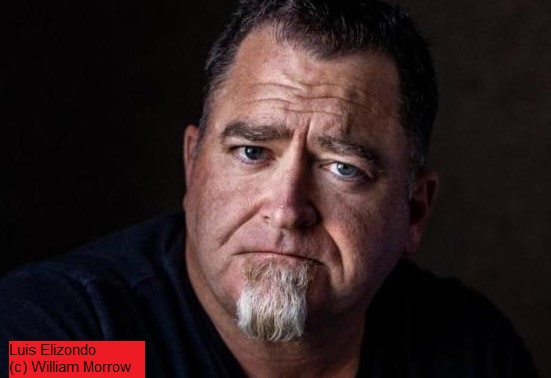
Initially, there was significant criticism of this proposed legislation, due to concern that there were too many loopholes allowing the government to delay — or completely avoid disclosure of this information. On Episode 1722 of the Fade to Black podcast with Jimmy Church, (at the 45-minute mark) attorney Danny Sheehan (who represents UAP whistleblower Lue Elizondo) criticized some provisions of the Schumer-Rounds Amendment which he found “troublesome”.
Meanwhile, in the House of Representatives, opposition to disclosure of the government’s knowledge about UAPs is being led by House Armed Services Committee Chair Mike Rogers (R-Ala.) and House Intelligence Committee Chair Mike Turner (R-Ohio). Senate Minority Leader Mitch McConnell (R Ky.) and the new House Speaker Mike Johnson are also aligned with this opposition.
Ultimately, the final version of the Schumer – Rounds Amendment, as approved by the full Senate, did away with two key provisions: establishment of a 9-member Citizens’ Review Board, composed of experts and civilians, to be selected by the President and confirmed by the Senate. Also stricken was a controversial provision which would have granted the federal government a right of “eminent domain” over any technologies or “biologics” recovered from UAPs.
Many individuals who had previously been critical of the Schumer-Rounds Amendment (out of concern that it did not go far enough) became even more critical of the scaled-down version. These criticisms were discussed by Christopher Sharp of the Liberation Times in an article entitled “Operation Kill Bill”.
After the Schumer – Rounds Amendment was decimated, whistleblower David Grusch commented that: “What we’re witnessing right now is the greatest legislative failure in American history”.
Despite widespread disappointment with the current state of the Schumer – Rounds Amendment, many people are voicing enthusiasm that as recently as a few years ago, nobody would have expected that the U.S. government would be taking the UFO subject so seriously right now. In The December 14 New York Times, Senator Chuck Schumer described this Amendment as a major win for government transparency on this subject, which could provide a strong foundation for future action.
As you may have noticed, I made no blog postings during calendar year 2022. Like many people, I was awaiting the release of an overdue report from the Office of the Director of National Intelligence (ODNI) concerning the Pentagon’s assessments of unidentified aerial phenomena (UAP). Rumors had been circulating that the ODNI was determined to release this report by the end of 2022. When New Year’s Eve came and went with no report, I was reminded of last Thanksgiving, when Micah Hanks wrote this for The Debrief as he wondered when we might see the ODNI report:
Late last month, the second in an ongoing series of reports on the Pentagon’s assessments of unidentified aerial phenomena (UAP) was expected to arrive. The 2022 National Defense Authorization Act (NDAA) mandated that the report be delivered to Congress by October 31, followed by an unclassified version of the briefing made available to the public thereafter.
“Director of National Intelligence Avril Haines has until Monday to provide Congress with its first annual unclassified update on Unexplained Aerial Phenomena,” ABC News reported, adding that the forthcoming report was expected to detail “all new UAP incidents over the past year and any previously unreported incidents.”
As Halloween came and went, it was evident that the new report would be late on arrival. With little doubt, the ODNI website received a significant amount of traffic as watchful UAP proponents kept an eye on the site’s Newsroom page where its Reports and Publications appear online. Yet despite copious amounts of page refreshes, the report never arrived.
It is currently January 1, 2023, and we are still waiting for that report.
Here at TheCenterLane, I have refocused these postings to the subject of bipartisanship in Washington, D.C. — rather than the subject of “centrism” because that word has become synonymous with corporatism. No single subject had returned bipartisanship to our nation’s capitol until the subject of the UFO phenomenon (now referred to as UAP for “unidentified aerial phenomena”) experienced some serious reconsideration after the December 16, 2017, edition of The New York Times contained an astonishing story about the Defense Department’s Advanced Aerospace Threat Identification Program (AATIP).
When Shane Harris of the Washington Post recently interviewed Leslie Kean for the Chatter podcast, Ms. Kean discussed the facts leading up to the revelation that the Pentagon had been secretly studying unidentified aerial phenomena (UAPs). At the same time in 2017, Bryan Bender had been preparing his own article for Politico concerning that program because the same sources who had been feeding information to Leslie Kean were making a concerted effort to bring this controversial subject to the public’s attention.
On his Openminds.tv website, Alejandro Rojas explained how Christopher K. Mellon (former Deputy Assistant Secretary of Defense for Intelligence in the administrations of President George W. Bush and Bill Clinton) as well as Luis “Lue” Elizondo, former Director of the Defense Department’s Advanced Aerospace Threat Identification Program (AATIP), presented this story to both Leslie Kean and Bryan Bender:
Elizondo and Mellon began to approach journalists with their UFO videos, documents, and data. In an interview on Open Minds UFO Radio, Politico’s Bryan Bender says he was approached in the middle of 2017 and was able to confirm AATIP’s existence with his sources “on the hill.”
In a separate Open Minds UFO Radio interview, (Leslie) Kean says she was invited to a meeting with Elizondo held on October 4, 2017, “arranged by some of Elizondo’s colleagues” who knew her.
“I went down and went to Washington, and we spent three or four hours together,” says Kean. “I was shown the videos that were eventually released with our story. And just given, you know, told all about Harry Reid, was shown documents about Harry Reid’s involvement and just the story was kind of laid out for me at this meeting.”
“I realized at that point that it was a New York Times level story, given the documentation that was available for the program and for the people involved and everything else,” Kean continued. “And so that’s how it all started.”
After the New York Times article was published, a number of UFO bloggers and podcasters found it difficult to restrain their jealousy of Leslie Kean’s ability to establish such a significant milestone, with the publication of this story in one of this nation’s most prominent newspapers. Those individuals began to insist that The New York Times article was “WRONG” because it allegedly confused the Defense Department’s Advanced Aerospace Threat Identification Program (AATIP) with the Pentagon’s predecessor program, the Advanced Aerospace Weapon System Applications Program (AAWSAP). As Bryan Bender later explained on Twitter, it seemed as though a decision was made (by Mellon, Elizondo or both) to “shape the story” in order to avoid discussion of AAWSAP’s investigations of the wider variety of paranormal events that had been taking place at Robert Bigelow’s Skinwalker Ranch (where most of those AAWSAP investigations unfolded):
Maybe some context here would help: Elizondo and Mellon purposely buried AAWSAP when they went public in 2017. It was a huge part of the story purposely left out. They made a strategic decision not to bring AAWSAP and Skinwalker into the discussion.
* * *
I have discussed this with them numerous times and their view was that it would muddle their message on UAPs and the successor AATIP program that Elizondo oversaw. Moreover, the AAWSAP players, particularly (James) Lacatski, refused to talk and still won’t beyond written responses.
* * *
On the question of Elizondo and Mellon’s credibility, any informed observer knows they have played a huge role in bringing the debate about UAPs to the fore and are still a major influence in ensuring Congress — and the public — get more answers.
* * *
They shaped the original story — no surprise there — but to my knowledge they have never lied. I still consider them credible sources. In retrospect there is no doubt we all should have asked more questions about the origin of AATIP.
More significant pushback against the efforts of Chris Mellon and Lue Elizondo comes from a group of religious fanatics within the Defense Department, informally referred to as “the Collins Elite”. Efforts by this faction to suppress any revelations from the Pentagon concerning the UAP subject have been discussed by Lue Elizondo, retired CIA case officer John Ramirez (at 53:22 in the linked interview by Martin Willis), as well as in Ryan Sprague’s online discussion with Leslie Kean and Diana Walsh Pasulka, a professor of Religious Studies at University of North Carolina Wilmington (at the 21-minute mark of the foregoing link).
A recent effort to push back against the efforts to disclose the Defense Department’s knowledge of the UAP subject appears to have resulted in the publication of articles in several of our nation’s most prominent newspapers, just before Halloween of 2022, when that year’s report from the ODNI was due. Those articles appeared in late October, in an apparent effort to “front run” the ODNI report with a more skeptical look at the entire UAP phenomenon. This front-running tactic was a replay from last year, as I discussed in December of 2021, when people within the Pentagon attempted to “front run” Senator Kristen Gillibrand’s amendment to the 2021 National Defense Authorization Act with the creation of the Pentagon’s own Airborne Object Identification and Management Synchronization Group (AOIMSG). Despite a futile attempt to launch AOIMSG, that endeavor failed.
The planted newspaper articles (previously mentioned) served only to motivate Chris Mellon to fight back with the release of this blog posting on December 29, 2022.
Chris Mellon is just one of many commentators who regularly warn us of the consequences which can result from continued obfuscation and foot-dragging concerning recent findings about this subject. In the previously discussed interview with Leslie Kean (conducted by Shane Harris) Ms. Kean (at the 71-minute point) noted that it is advisable to gradually acclimate people to what can be safely disclosed about the UAP situation because abrupt revelations of this nature could result in unpleasant reactions – particularly for financial markets. She emphasized that “this is not something that you want to just dump on people’s heads” because this is “a major paradigm shift for our planet”. In his 2017 book, Managing Magic, Grant Cameron discussed a theory that the United States government is gradually releasing the truth about UAPs. When John Ramirez was interviewed by Martin Willis (discussed above) he explained (beginning at the 59-minute point) that the presence of the entities he describes as ETs on Earth is under the control of the ETs themselves and that they are planning to reveal their presence here (perhaps by a mass landing) in 2027. Mr. Ramirez said that he heard 2027 mentioned as the disclosure year while he as acting in an “official capacity” which he could not reveal. He explained that there are people within our government who are aware of this and that is why there is a gradual “ramping up” of the disclosure process.
So here we are . . . five years after the revelations of the December 2017 New York Times article and five years before a significant revelation concerning UAPs. In the meantime, we can likely expect to hear from a number of self-professed “authorities” on this subject who will provide us with a vast amount of amazing information – for a price.
Here at TheCenterLane, I have been following how the mainstream news media have been taking a more serious look at the UFO phenomenon since the February 4, 2016, death of Apollo 14 astronaut, Edgar Mitchell. In my March 28, 2016, piece I pointed out that:
Although many news reports announcing Mitchell’s death noted his interest in the subject of UFOs, the flow of snark was attenuated in light of the somber circumstances. Since that day in February, there has been little – if any – ridicule about Mitchell’s interest in UFOs because the entire subject has actually gained a modicum of respect. In fact, many of the memorial articles about Edgar Mitchell spoke admirably of the astronaut’s quest to expose this truth.
Almost two years later, the December 16, 2017, edition of The New York Times contained an astonishing story about the Defense Department’s Advanced Aerospace Threat Identification Program (AATIP). AATIP was headquartered on the fifth floor of the Pentagon’s C Ring and was managed by Luis Elizondo for the Defense Intelligence Agency. AATIP was tasked with studying UFOs (now referred to as UAPs – for Unidentified Aerial Phenomena). As a result, the subject of UFOs and UAPs has been taken more seriously by politicians and news outlets.
Throughout the months and years after the publication of the December, 2017 New York Times piece, UFO skeptics and debunkers have been preoccupied with “putting out fires” erupting in news outlets which have dared to report the truth about these phenomena. As time has progressed and the truth has been wandering into the daylight, those naysayers have become increasingly overwhelmed.
Lue Elizondo has been making appearances on a wide variety of newscasts, from 60 Minutes on CBS to Tucker Carlson Tonight on Fox News. Elizondo’s appearances on Web podcasts, such as Curt Jaimungal’s Theories of Everything have ignited speculation about the extent of UAP information kept secret by the Pentagon and whether this information might be subject to gradual release according to a secret timetable.
On September 13, 2021, The Hollywood Reporter disclosed that Lue Elizondo had signed a book deal with William Morrow, an imprint of HarperCollins, after a competitive bidding war for the U.S. publishing rights for Elizondo’s memoirs concerning his investigations into the UFO/UAP subject. This upcoming book is expected to bring some new revelations about UAPs (described by The Hollywood Reporter as “shocking details”). Beyond that, Elizondo can be expected to expose the measures taken by those who have attempted to maintain the high degree of secrecy concealing these phenomena. The American public and its elected officials have become increasingly outraged by the suppression of this important information.
On November 24, 2021, Christopher K. Mellon, (former Deputy Assistant Secretary of Defense for Intelligence in the administrations of President George W. Bush and President Bill Clinton) wrote an open letter to Congressional Representative Ruben Gallego, commending him for his support of Senator Kristen Gillibrand’s amendment to the National Defense Authorization Act.
The Pentagon’s initial reaction to this proposed legislation was an attempt to “front run” the effort through the suggested creation of its own Airborne Object Identification and Management Synchronization Group (AOIMSG). According to the Defense Department, the AOIMSG would limit its investigation of UAPs to situations involving incursions into Special Use Airspace (military operations areas and other restricted airspace). Worse yet, oversight of the AOIMSG would be handled by an Executive Council comprised of Defense Department and “Intelligence Community” members, as opposed to Congressional oversight and the resulting transparency that such a course would necessitate. The overwhelming pushback against the Pentagon’s AOIMSG idea served only to secure the passage of what became known as the bipartisan Rubio-Gillibrand amendment.
After the amendment was approved for inclusion in the 2012 National Defense Authorization Act, co-sponsor Senator Marco Rubio issued a press release discussing the establishment of a UAP office within the Defense Department, which would be tasked with preparing “a full spectrum of intelligence, scientific, and technical assessments related to UAPs”, including:
Collection & Analysis of Data into a Central Repository: The UAP office will supervise the development and execution of intelligence collection and analysis regarding UAPs in order to understand their technical and scientific characteristics. The UAP office will receive relevant data immediately from Intelligence Community agencies.
Establish a Science Plan: The UAP office will be responsible for implementing a science plan to test scientific theories related to UAP characteristics and performances.
Build a National Priorities Intelligence Framework: The DNI will be required to consult with the Secretary of Defense to assign a level or priority within the National Intelligence Priorities Framework related to UAPs.
Evaluate any links between UAPs and foreign governments or non-state actors: The UAP office will be tasked with evaluating threats that UAPs may pose to the United States. Additionally, the office will be responsible for coordinating with federal agencies, including the FAA and NASA, and international allies and partners on UAPs.
Report to Congress: The UAP office will be required to provide unclassified annual reports to Congress and classified semi-annual briefings on intelligence analysis, reported incidents, health-related effects, the role of foreign governments, and nuclear security.
With the passage of the National Defense Authorization Act and the included Rubio-Gillibrand amendment, advocates for government and military transparency on the UAP subject were popping open champagne bottles and celebrating. Meanwhile, sober minds at the Liberation Times website, which has been advocating for such transparency, took a hard look at the road ahead, as the Pentagon began to undertake a responsible approach to this subject for the first time in its history.
Ever since the term “centrism” became a euphemistic, “dog whistle” term for corporatism, I have been distancing myself from the ranks of so-called Centrists. These days, a left-leaning politician will claim to be “tacking to the center” while heading to K Street to pick up a fat campaign contribution. Some conservatives claim to be Centrists simply because they disavow QAnon.
However, there is one subject where I have maintained a consistently centrist, middle-of-the road stance and that is with respect to the subject of UFOs. People demonstrating any concern for this bailiwick usually fall into either of two camps: The Cult of the Credulous (those who never question any claim about a sighting or entity encounter) or the Denialists (who regularly insist that “this can’t be happening because it’s impossible”).
Whenever an unsupported, sensational claim about UFOs triggers an avalanche of clicks on websites, the Denialists benefit as mainstream media outlets beg for a perspective that might counterbalance what appears as (and sometimes is) a delusional rant.
On Jan. 31, 2017, I discussed how the December 16, 2017, edition of The New York Times contained an astonishing story about the Defense Department’s Advanced Aerospace Threat Identification Program (AATIP). AATIP was headquartered on the fifth floor of the Pentagon’s C Ring and was managed by Luis Elizondo for the Defense Intelligence Agency. Since that time, the flow of sober-minded, yet intriguing reportage on the subject continued and Lue Elizondo found himself as the star of a television program called, Unidentified on the History Channel.
Despite the increased quality of recently published information on the UFO phenomenon, the occasional oddball story worked its way into the national spotlight to restore some of the ridicule previously directed at this subject.
More recently, a December 3, 2020, article published by Israeli newspaper, Yediot Aharonot reverberated throughout the world’s major news outlets. Most of those outlets focused attention on a few sensational revelations from Prof. Haim Eshed, the 87-year-old former head of Israel’s space security program. As The Jerusalem Post reported, Professor Eshed claimed that a “Galactic Federation” has made some formal agreements with the United States. The reference to a Galactic Federation sparked some commentary suggesting that at his advanced age, Eshed might have been confusing Star Trek episodes with his real-life experience.
On his new website, The Debrief, Tim McMillan reported that Yediot Aharonot journalist Raanan Shaked insisted that Professor Eshed’s remarks about the Galactic Federation were taken out of context and that Eshed was discussing some popular folklore about the UFO subject, rather than any information he acquired through his position with Israel’s space security program.
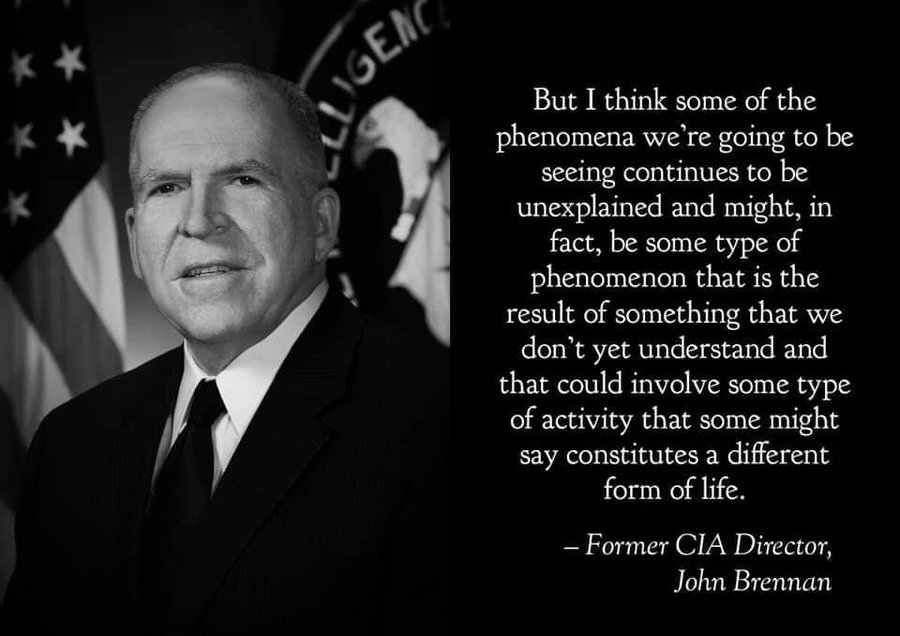
While the Cult of the Credulous continued to ponder the possible details of a “secret deal” between the United States and the Galactic Federation, a less-sensational report surfaced featuring an interview with former CIA Director John Brennan. Libertarian economist, Prof. Tyler Cowen of George Mason University published a report (and a video) of his recent interview with John Brennan, detailing their conversation concerning UFOs. The interview prompted the creation of several memes which became popular at websites dealing with the UFO phenomenon. Brennan’s comments about the UFO topic appear in the linked video at 6:42 thru 9:39.
The foregoing Brennan meme was reminiscent of the meme which resulted from Tucker Carlson’s interview with theoretical physics Professor Michio Kaku during the Sept. 20. 2019, broadcast of Carlson’s Fox News program:
Throughout the past ten years, Democratic politicians have increasingly relied on the term “centrism” as a euphemism for “corporatism”. As centrism has been replaced by adherence to corporatism, it has become difficult to identify any politician who advocates centrist views. Republican politicians are too afraid of offending their party’s “base”, whose opinions are shaped by the Trump/Fox News axis. By now, nearly all Democrats who identify as centrists are actually corporatists.
During the current campaign cycle, the Democratic National Committee (DNC) and most mainstream news outlets have advanced the cause of promoting a “centrist” presidential candidate as the best route for defeating Donald Trump in 2020. The chant, “Vote Blue no matter who” seems to mean “Shut up and vote for the corporatist, designated as your candidate by the DNC”.
In a recent interview, Michael Moore explained that the majority of Americans agree with the progressive Democrats who support “Medicare for all”, increased measures to limit climate change, increasing the minimum wage and reducing this nation’s absurd incarceration levels. Moore emphasized that a significant majority of the American people hold views to the left of what mainstream news outlets define as “the center”.
Moore’s point is now reverberating through news reports, which acknowledge voters’ increasing support for Bernie Sanders. On December 26, The New York Times ran a piece by Sydney Ember entitled, “Why Bernie Sanders Is Tough to Beat”. At Newsweek, an article by James Crowley offered the following perspective about the Sanders campaign from President Obama’s senior advisor, Dan Pfeiffer:
“He has a very good shot of winning Iowa, a very good shot of winning New Hampshire, and other than Joe Biden, the best shot of winning Nevada,” said Pfeiffer, noting that these early odds improved Sanders’ chances going forward. “He could build a real head of steam heading into South Carolina and Super Tuesday,” …
Although the DNC and CNN have pushed hard to promote the candidacy of Joe Biden (Hillary 2.0) Biden’s popularity waned as he began to prove himself worthy of Kim Jong-un’s now-famous label, “dotard”. At that point, former Republican Mike Bloomberg jumped into the race, offering Democratic voters a billionaire alternative to progressivists, such as Bernie Sanders and Elizabeth Warren. Mainstream news outlets began to express excitement about the candidacy of Pete Buttigieg (Hillary 2.1) who could carry the corporatist banner. However, as political commentators demanded that Buttigieg identify the corporations for whom he did work as a consultant at McKinsey & Company, Buttigieg’s polling numbers became stalled in the single digits. When the Ukrainegate scandal began to dominate the news, Biden’s popularity experienced a rebound. Nevertheless, many commenters remained doubtful that Biden could maintain his leading position long enough to secure the Democratic nomination. As a result, several news sources attempted to boost support for the charisma-deficient corporatist, Amy Klobuchar (Hillary 2.2).
At this point, it is clear that the political center – which formerly embraced a balance of liberal and conservative views – has become irrelevant to the 2020 presidential campaign. Centrism died with the rise of Trumpism and the Democrats’ insatiable quest for money from deep-pocketed corporate activists. Worse yet, a May 23, 2018, opinion piece by David Adler for The New York Times revealed that only 42 percent of people identifying as “centrists” considered Democracy as a very good political system. Adler’s analysis of polling data revealed that in the United States, fewer than half of people in the political center viewed elections as essential. Adler reached this disturbing conclusion:
“As Western democracies descend into dysfunction, no group is immune to the allure of authoritarianism — least of all centrists, who seem to prefer strong and efficient government over messy democratic politics.”
Regardless
of the accuracy of David Adler’s analysis, America’s current appetite for “centrism”
is restricted to those policies most beneficial for advancing a corporatist
agenda.
The
end of 2018 marks the demise of Donald Trump’s “rubber stamp” Congress. To the
surprise of many, the Democratic Party managed to regain control of the House
of Representatives during the midterm elections. With the Democrats controlling
the House, Trump might decide that the Presidency is no longer any fun – with
too many obligations and duties, demanding such loathsome tasks as reading and
listening to other people.
Meanwhile, the Democrats are scrambling to present a united front behind whomever might be their 2020 presidential nominee. The party’s establishment seems terrified that a new generation of progressives – exemplified by Alexandria Ocasio-Cortez – might scare away the deep pockets of K Street lobbyists. On the other hand, progressive-minded voters have been conditioned to view Centrists as corporatists in the tradition of Hillary Clinton. Will a unifying candidate, with the backbone to advance a forward-looking agenda, gain enough traction to rise above a large pack of ambitious contenders?
January 2019 brings us the long-awaited release of American Cosmic, a book by Professor Diana Walsh Pasulka from the University of North Carolina at Wilmington. I discussed American Cosmic in my last posting. Although the book was originally scheduled for release in April of 2018, the publisher (Oxford University Press) found it necessary to “dumb-down” the book so that it would be accessible to a mainstream audience. (Oxford University Press is primarily involved in the production of academic textbooks.)
American Cosmic will offer information about the involvement of Silicon Valley entrepreneurs in the reverse-engineering of UFO technology and the assimilation of that technology into products manufactured by aerospace industry giants. This book could have a significant impact on the acceptability of the taboo subject of UFOs. (They are now referred to as unidentified aerial phenomena or UAPs to avoid the stigma of lunacy associated with UFOs.) A significant amount of rumbling from the rumor mill suggests that the Pentagon is poised to release some “dramatic” UAP videos in January or February.
Beyond the damage inflicted upon the environment by Donald Trump’s deliberate efforts to sabotage the measures and mechanisms of environmental protection, 2018 brought us more bad news about the outlook for climate change. A rather bleak National Climate Assessment (NCA) report was released on Black Friday (the day after Thanksgiving). The NCA is a United States government interagency effort focused on climate change science. At the website for the Union of Concerned Scientists, senior climate scientist Rachel Licker discussed the sleazy handling of the report by the Trump Administration:
The Trump Administration tried to bury the report, which they were legally mandated to issue, over a holiday weekend. When that failed and the report drew wide coverage, President Trump, his press secretary, and two cabinet secretaries tried to discredit the assessment and disparage the work of more than 300 scientists and experts from federal, state, and local governments, tribes and Indigenous communities, national laboratories, universities, and the private sector who contributed to the report, many on a purely voluntary basis.
Hopes
run high that 2019 might be the year when decisive action is taken by special counsel
Robert Mueller and Congress to end the destructive, scandal-plagued Trump
presidency.
December 16, 2017, brought some severe headaches to those who make a practice of denying that UFOs really exist. The New York Times published a shocking story about the Defense Department’s Advanced Aerospace Threat Identification Program (AATIP). AATIP was headquartered on the fifth floor of the Pentagon’s C Ring and was managed by Luis Elizondo for the Defense Intelligence Agency.
The Times article disclosed that the AATIP, which began in 2007, investigated reports of unidentified flying objects. The online edition of the Times story included gun camera videos of an encounter between a UFO and two Navy F/A-18 Super Hornets, dispatched from the U.S. aircraft carrier Nimitz. The event occurred off the coast of San Diego in 2004. During the opening moments of the first video, one of the pilots remarked that there was “a whole fleet of them” at the scene. This contrasts with the denialists’ claim that there was only one UFO observed. Of particular concern to UFO skeptics was this passage from the Times piece:
A 2009 Pentagon briefing summary of the program prepared by its director at the time asserted that “what was considered science fiction is now science fact,” and that the United States was incapable of defending itself against some of the technologies discovered.
Beyond that, the Times reported that Las Vegas-based Bigelow Aerospace had modified buildings “… for the storage of metal alloys and other materials that Mr. Elizondo and program contractors said had been recovered from unidentified aerial phenomena.”
Skeptics and UFO debunkers immediately set about attempting to put the toothpaste back into the tube. Some news outlets and blogs followed the general theme of “nothing to see here – move along”. Some supposedly scientific sources published very un-scientific reports concerning the metal alloys held by Bigelow Aerospace (BAS). None of those reports were based the source’s own examination of any such metal samples. Similarly, the sources conducted no reviews of any BAS reports concerning those metals. Other attempts at pushback focused on the false claim that the $22 million study conducted by BAS revealed nothing.
On the other hand, George Knapp of KLAS TV News in Las Vegas pointed out that Bigelow Aerospace produced 36 technical reports and 38 other reports (some of which exceeded 100 pages) based on information gleaned from this project. Knapp also notes that Luis Elizondo has 24 videos from AATIP investigations. Knapp expects that all of those videos will be released.
UFO researcher Grant Cameron emphasizes that disclosure of the aforementioned Bigelow Aerospace project is just one of six efforts underway to reveal the latest understanding about UFOs. For several years, Dr. Jacques Vallee has been leading his own project involving the examination of anomalous materials recovered in connection with UFO incidents. In an August, 2017 interview conducted by Alex Tsakaris of the Skeptico website, Dr. Vallee offered this explanation concerning what his team learned about isotope ratios for some of those metals:
So, either it should be terrestrial, which we can find out very quickly, or it could be extraterrestrial, in which case you’d expect that it would vary by a few percent from the standard ratio.
Most of those machines are mass spectrometers and they are often used by geologists, among other people, who look at meteorites. Meteorites are extraterrestrial and they don’t have the same ratio of isotopes that you do if you pick up a piece of iron on earth. So they are used to looking at ratios that are a little bit different, but what we find are ratios that are 100% off.
April of 2018 brings the release of American Cosmic, a book by Professor Diana Walsh Pasulka from the University of North Carolina at Wilmington. American Cosmic will raise immense problems for the UFO denialists because it will offer information about the involvement of Silicon Valley entrepreneurs in the reverse-engineering of UFO technology and the assimilation of that technology into products manufactured by aerospace industry giants. More important, Dr. Pasulka discusses her trip to a UFO crash site in New Mexico (not Roswell) where crash debris is still being collected for examination by scientists working within the appropriate specialties. She shares the explanation provided to her by those entrepreneurs that inspections of material from this site continue to provide the inspiration and direction for some of the newest technological innovations. Some of those products are already in use.
The recent revelations made by the team represented by Luis Elizondo are only the beginning of an evidentiary avalanche, which will overwhelm those who continue to deny the reality of UFOs. Meanwhile, the rest of us can enjoy the music.
Most politicians from the Democratic Party still don’t get it. Hillary Clinton’s unexpected 2016 defeat and the party’s ever-decreasing ability to win elections has left it in a state of confusion. As Clare Malone pointed out for the FiveThirtyEight blog:
At the beginning of Obama’s term, Democrats controlled 59 percent of state legislatures, while now they control only 31 percent, the lowest percentage for the party since the turn of the 20th century. They held 29 governor’s offices and now have only 16, the party’s lowest number since 1920.
Despite the party’s efforts to win the hearts and minds of more voters, it has no real message. Clare Foran’s recent article for The Atlantic analyzed the consequences of the Democrats’ 2017 losing streak in the year’s four special elections and the party’s failure to develop an effective response strategy:
“The national brand is toxic,” said Democratic Representative Tim Ryan of Ohio, who unsuccessfully challenged Pelosi for the title of House minority leader last year, in an interview. “There’s just no doubt about it. We are not connecting with people the way we need to connect with them.”
At the heart of the Democratic Party’s troubles is its refusal to take a stand in favor of populism. Instead, it allows the forces of corporatism to direct the party’s agenda. There has been a persistent infection afflicting the party since the days of the Democratic Leadership Council. Michael Corcoran explained how the DLC, which ascended with the success of Bill Clinton, became a tainted brand after revelations of sponsorship from such corporatist forces as the Koch brothers. Worse yet, the DLC agenda has been reincarnated through a “center-left” think tank known as Third Way. By late 2013, many astute commentators noted that Third Way’s board was heavily populated by Wall Street executives and other investment bankers.
Donald Trump was able to win the 2016 election with a false portrayal of himself as a “populist”, while Hillary Clinton’s close ties to Goldman Sachs and her outright refusal to support single-payer healthcare cemented her reputation as a corporatist. Nevertheless, the Democratic Party has failed to learn anything from this experience. The party refuses to identify itself as a standard bearer for populism, leaving a void to be filled by those right-wing voices who recast the struggle as populism against the power of the federal government, rather than populism vs. corporatism. Instead, there is an ever-increasing effort by Third Way to keep the party tied to a corporatist agenda:
They are attempting to convince the party to shun its base and further embrace the so-called “vital center,” and the corporatism that has long defined these groups.
According to an ABC News/Washington Post poll conducted on July 13, 2017, only 37% of respondents agreed that the Democratic Party actually stood for something beyond merely opposing Donald Trump. A national poll conducted by Bloomberg News from July 8-12, 2017, indicated that the net favorable rating of the Democratic Party has remained unchanged at 42% since before the 2016 election (specifically August of that year). The poll found the party’s unfavorability rating at a more-significant 48%. Donald Trump’s dismal approval ratings are obviously doing nothing to help the Democratic Party. On August 3, 2017, Quinnipiac University published results of a poll indicating 51% support for replacing the current health care system with a single payer system in which Medicare would cover every American citizen. Only 38% of the respondents opposed that idea.
Too many venal Democratic politicians hide behind the excuse of “tacking to the center” while betraying their constituents in service of their own masters on K Street. Centrism involves the flexibility to embrace either liberal or conservative ideas, depending on the circumstances of the particular situation. In contrast, the Independent Voter Network provided an interesting explanation of how corporatism works. Back in 2010, the IVN served-up Ron Paul’s retort to the wingnut claim that President Obama was a socialist:
Corporatism is a system where businesses are nominally in private hands, but are in fact controlled by the government. In a corporatist state, government officials often act in collusion with their favored business interests to design polices that give those interests a monopoly position, to the detriment of both competitors and consumers.
Democrats would be wise to avoid the mistaken belief in supporting Republican objectives as the only route to victory in “red” states. For example, many conservative pundits argue that Democrat candidates would be foolish to support single-payer healthcare when seeking office in Republican strongholds. However, Trump’s victory demonstrated that populist causes could resonate with Republican-leaning voters. The Democratic Party needs to develop the courage to become a champion of populism instead of corporatism.
The aftermath of the 2016 presidential election brought a flood of outrage concerning Russia’s hacking into the email accounts of Democratic Party leaders and officials at the Democratic National Committee. However, it was only after Hillary Clinton lost the election when the level of righteous indignation reached a fever pitch. The period between the outset of the Democratic Convention (when the hacked emails were made public) and Election Day brought some heat for those few DNC officials who were caught plotting against Bernie Sanders to secure the nomination of Hillary Clinton. Nevertheless, the plot to steal the nomination for Hillary involved a broader cast of characters.
From the outset of the 2016 primary season, the corporate media – particularly CNN – made a point of suppressing any publicity about the Bernie Sanders campaign. Sanders supporters took their protests to social media, using #BernieBlackout and #OccupyCNN to expose the conspiracy of silence. Once the nomination of Hillary became a fait accompli, a victory celebration took place on CNN’s New Day program, for Friday, June 10, 2016. Throughout that morning, Chris Cuomo and the other tools on the program made no secret of their disdain for Bernie Sanders. The spirit seemed to go beyond mere celebration to a feeling of accomplishment, as though they had helped place Hillary on what appeared to be a clear path to the presidency. Surprisingly, Donna Brazile was not on hand for the festivities.
Did Russian Hackers Help Steal the Nomination for Hillary?
Concern about Russia’s hacking of DNC emails to expose the ugly truth about Hillary Clinton’s priorities has focused on the idea that Vladimir Putin was determined to see Donald Trump defeat Hillary. The more important question should have been whether Putin made sure that the defeatable Hillary, rather than Bernie Sanders, was Trump’s opponent. Polls conducted during the primary season indicated that Sanders could have beaten Trump, while Hillary was a vulnerable candidate who faced a serious risk of losing the election. This could have explained why the hacked emails were not released until a few days before the Democratic Convention began. The Russians did not want their efforts to deliver the Democratic nomination to a candidate who could have beaten Putin’s choice for the American presidency.
Although President Obama and others have emphasized that the Russians could not have hacked the actual voting machines, there was another vulnerability which the hackers could have exploited to deliver the nomination for Hillary. After Clinton secured her party’s nomination, some Sanders supporters formed an investigative unit: ElectionJustice.net (originally: ElectionJusticeUSA.org). The group’s final report, Democracy Lost documented how registration tampering removed the names of registered Democratic voters from the voting rolls in those states which required voters to specify their party affiliation in order to vote in primary elections.
Election Justice verified reports of voter registration tampering in more than 20 states. A hacker could have hacked the Sanders campaign database for the names of contributors residing in states requiring party preference designation as part of the voter registration process. The hackers would then invade each state’s voter registration database to change the party affiliations of those voters, making them ineligible to vote on primary day. The investigation by Election Justice revealed that a significant number of would-be Sanders supporters were unable to vote in their state primaries because their registrations had been changed. Did those voters contribute to the Sanders campaign or were they on a Sanders campaign mailing list? A proper investigation into the Russian hacking should cover this area because a similar event could take place in a future election.
Many Republicans have criticized the inquiries into Russia’s hacking of the DNC as an attempt at de-legitimizing the election of Donald Trump. Don’t count on the Democrats to support a broader investigation into voter registration tampering because it could reveal that it was conducted by DNC operatives or Russian hackers. In either case, the illegitimacy of the Clinton nomination could be exposed and the people at CNN might not be too happy about that.
As President Obama wraps-up his second term, people are looking back to reassess his handling of the Great Recession. During his first year in office, our Disappointer-In-Chief introduced his own version of “trickle-down economics” by way of a bank bailout scheme called the Public-Private Investment Program (PPIP or “pee-pip”).
Despite his July 15, 2008, campaign promise that if he were elected, there would be “no more trickle-down economics”, the President and the Federal Reserve embarked on a course of bailing out the banks, rather than distressed businesses or the taxpayers themselves.
As this writer pointed out on Sept. 21, 2009, Australian economist Steve Keen published a report from his website explaining how the “money multiplier” myth, fed to Obama by the very people who facilitated the financial crisis, would be of no use in the effort to strengthen the economy.
Concerns that the United States could be doomed to a Japan-like addiction to monetary stimulus gimmicks have amped-up enthusiasm for the Fed to become more aggressive about raising interest rates. Meanwhile, many economists contend that tightening monetary policy before the economy reaches a robust state could plunge the nation back into recession.
In April 2016, former Federal Reserve Chairman Ben Bernanke advocated the use of “helicopter money” as a last-resort strategy to jump-start a stalled economy. This provoked a response from economist Steve Keen emphasizing that Bernanke and other mainstream economists have shared a flawed belief that the public’s expectations for a healthy rate of inflation could cause such inflation to occur. In other words: “Inflationary expectations cause inflation.”
Steve Keen consistently emphasizes the need to understand how excessive private debt causes severe economic contraction and financial crises. Specifically, when the level of private debt exceeds GDP by 150% and that level continues to grow – disaster awaits.
So what can be done to keep the debt-to-GDP ratio in check? In this video, Steve Keen and Edward Harrison of the Credit Writedowns website explain how Ben Bernanke’s helicopter could be sent on a debt reduction mission.
TheCenterLane.com offers opinion, news and commentary on politics, the economy, finance and other random events that either find their way into the news or are ignored by the news reporting business. As the name suggests, our focus will be on what seems to be happening in The Center Lane of American politics and what the view from the Center reveals about the events in the left and right lanes. Your Host, John T. Burke, Jr., earned his Bachelor of Arts degree from Boston College with a double major in Speech Communications and Philosophy. He earned his law degree (Juris Doctor) from the Illinois Institute of Technology / Chicago-Kent College of Law.